Going Mech: Setting Up Your First Mechanical Mod
Contents
This guide is for experienced adult vapers. Many vapers stick with cigalikes, pods and other entry-level devices, but some want to tinker, which leads to a mechanical mod.
A mech mod offers the most control, but it has no electronic safety protection. That makes battery knowledge essential before you start.
In this guide, we’ll walk you through what you need to know before you buy your first mech mod. Our goal is to give you the information you need to make an informed decision.
What is a Mech Mod?
So what exactly is a mechanical mod? In essence it’s the most basic type of vaping device out there. A mech mod consists of a tube or box to hold a battery. On top, the base is fitted with a connector, and to the bottom (or side) a firing button. An atomizer is attached to the connector, and when the button is pressed a circuit is completed and the coil is heated. Mech mods DO NOT include screens, lights or additional buttons.
Unlike an eGo or any regulated mod (where electrical circuitry controls the vaping experience), the performance of a mechanical mod depends solely on the user; who builds a coil to their exact specifications, and thus alters the amount of vapor production, temperature, flavor and so forth. This presents a unique set of challenges, as there is no circuitry to protect you from short circuits, overheating or a coil that draws too much current.
This means you’ll need to start reading up on concepts like Ohm’s Law. Why? At sub-ohm levels, the coil and battery generate higher levels of heat. Go too low and you can exceed the battery's continuous discharge rating, which can cause it to overheat, vent or even explode. Regulated devices include circuits to prevent this; your mech mod does not.
Before you get started, you’ll need to choose a mech mod:
Choosing a Mechanical Mod
Design
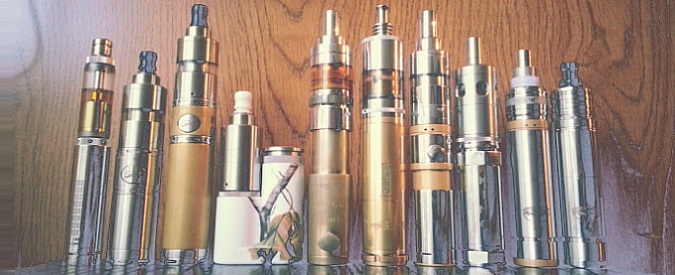
When it comes to design, mechanical mods are far more flexible (and interesting) than their regulated counterparts. They come in various shapes and sizes, and their aesthetics vary from plain to ridiculously outlandish. Although most mechanical mods are cylindrical in shape, box-shaped mechanical mods are becoming much more popular. Some tube mods are actually “telescoping,” meaning you can adjust the length based upon the size of the battery.
Most mechanical mods use one (or two) 18650 sized batteries, but the 18650 has a little brother called an 18350 which is about half the size. Smaller cells like the 18350 usually have lower discharge limits, so they need higher-resistance builds. For more capacity, larger 20700, 21700 and 26650 cells are also used, but mech mods for them are less common.
Construction
Unlike regulated VV/VW devices, mechanical mods have no circuitry and very little in the way of fragile parts. This means a mech mod is usually more durable in comparison. With that being said, the materials used to build the mod can impact its overall performance and longevity.
For example, a mod created with aluminum will be lighter, but more likely to scratch and dent compared to a mod made with stainless steel. Copper and brass are also options, each with pros and cons. You’ll also want to consider the material of your battery and switch contacts, which can impact performance. Silver is the most conductive, followed by copper, gold and then brass.
Authentic vs. Clone
This debate can certainly get heated, but the fact is that authentic mechanical mods are almost always significantly more expensive than clones. Yes, in some cases the price of an authentic may be relatively affordable, but depending on your budget a clone may still be your only option. If you decide on a clone, do your research: not all clones are created equal, and there is certainly a difference between a quality mod clone and a cheap knockoff.
Atomizer & Coil Guide
Want to chase clouds? A mechanical mod is definitely a great way to go! Of course this requires a decent atomizer and the right coil, so let’s go over the basics:
RDA vs. RTA
When vapers first get into vaping, they often start with setups where the tank itself is just bought, filled, and vaped. With mechanical mods, though, where customization and performance are the primary focus, rebuildable atomizers (RBAs) are the hardware of choice. They come in two main forms: RDA (Rebuildable Dripping Atomizer) and RTA (Rebuildable Tank Atomizer)
The RDA is what most new prospective mech mod owners will probably think of first. Here, there is no tank used at all. E-juice is just “dripped” onto the coils and wick directly. I prefer an RDA because of the ability to switch between flavors quickly and easily. Many people also prefer RDAs because of the outstanding flavor. Of course, if you have an all-day vape that you like, this might not be your cup of tea. And if you don’t want to spend time constantly “dripping” juice, consider the RTA.
The RTA still allows you change your coils and wick fairly easily, but it includes a tank to hold your e-juice much like a standard tank setup. But unlike those cheap disposable tanks or anything with a replaceable head, an RTA comes completely apart for cleaning and for coil and wick replacement.
The Right Coil
Expect to spend a good deal of time building and trying out new coil configurations when starting your mech mod journey. Familiarize yourself with how to build coils and know the limits of your battery.
An ohm reader is essential with a mechanical mod. Check every build before you fire it, so you know the resistance is within the safe range of your battery and that there is no short.
Unsure? Check out this handy vaping power chart.
Quality Wicks
Good wicking material is also important. You’re no longer dealing with premade wicks here, so you want to make sure optimal materials are used.
Avoid ordinary cosmetic cotton balls, which can contain additives or synthetic fibers. Use cotton made for wicking.
Instead, use organic cotton or wicking cotton sold by various online suppliers. I use Wick ‘n Vape’s Cotton Bacon.
Cells & Battery Safety Tips
As I’ve already mentioned, there are three main types of cells used in mechanical mods; the 18350, 18650 and 26650. With all of the inherent risks, choosing the right type of battery here is crucial. Use a high-drain cell from a known brand with a safer chemistry (such as IMR, INR or other high-drain lithium-ion cells), and check its real continuous discharge rating. Don't use protected or low-drain ICR cells made for flashlights or laptops; they aren't designed for these loads.
Once again, knowing Ohm’s Law is vital. Divide the battery's fully charged voltage (4.2V for one cell) by your coil's resistance to get the current: a 0.2 ohm coil draws about 21 amps, while a 0.5 ohm coil draws about 8.4 amps.
Never exceed the cell's continuous discharge rating (CDR), and leave headroom below it. My personal experience has found little reason to build below 0.5 ohms on a single-cell mech.
Dual-Battery (Series) Mods
In a series mech, two cells stack to about 8.4V, so the current through the coil doubles for the same resistance: 8.4V on a 0.5 ohm coil is about 17 amps. Build higher resistance coils for series mods.
Always use a married pair: two cells of the same brand, model and age, charged and used together. The FDA's battery safety tips warn against mixing brands, charge levels, or old and new batteries.
Everyday Battery Habits
- Replace any cell with a torn or nicked wrap, dents, or water damage.
- Carry spare cells in a plastic case, never loose in a pocket with keys or coins.
- Charge cells in a proper external charger on a hard surface, never unattended or overnight.
- Choose a mod with vent holes, and stop using it if it gets hot in your hand or pocket.
- Lock the fire button or remove the battery when you store the mod.
Another word before we move on: be wary of counterfeits! This has become an increasingly bigger problem as the popularity of vaping has exploded (no pun intended). Buy cells from reputable battery or vape suppliers rather than random marketplace listings. A lot of cheap, rewrapped or unlabeled batteries are knockoffs with overstated ratings. Companies like Efest have even gone as far as putting authenticity stickers on their batteries to help fight counterfeiting, but it’s not a perfect system. As they say, buyer beware.
A Few Things Before You Commit…
Before you use a mechanical mod for the first time, reassess your nicotine strength. Mech mods with low-resistance builds produce a lot more vapor than basic e-cigs, so you take in more nicotine with each draw.
I’ve found that a good rule of thumb is to reduce your nic level by at least two-thirds. If you were at 18 or 24mg, stepping down to 6mg is a good idea. 12mg vapers should consider switching to 3mg. If you feel the symptoms of being “over-nic’d” (ie: dizziness, headaches, nausea, etc.) – lower your nicotine level!
Mechanical mods also take regular upkeep. Change wicks whenever they taste burnt or discolored, and replace coils as performance drops.
If you’re a bit fat-fingered like myself, consider investing in a coil jig to make coils. While a tiny screwdriver will do, I’ve had a much easier time using a jig. Keep the contacts and threads clean, since dirty contacts reduce performance and can make the mod run hot.
Vaping products are for adults 21 and older who smoke or already vape. If you don't use nicotine, don't start.