How Electronic Cigarettes Work
Contents
Note: This guide is for adults 21 and over who already smoke or vape. If you don't use nicotine, don't start.
Electronic cigarettes deliver nicotine without burning tobacco. They heat a liquid into an aerosol (often called vapor) that gives the feel and flavor of smoking.
Because nothing burns, e-cigarettes don't produce tar or carbon monoxide. The NHS says the liquid and vapor still contain some potentially harmful chemicals also found in cigarette smoke, but at much lower levels.
Plenty of people have quit smoking with a vape. A Cochrane review found nicotine e-cigarettes help more people quit than nicotine replacement therapy, though no e-cigarette is FDA-approved as a quit aid. If you smoke and are thinking about switching, this guide explains how they work.
In this article, we cover everything you need to know about how electronic cigarettes work, their components, and their effects on your health.
E-Cigarette Components
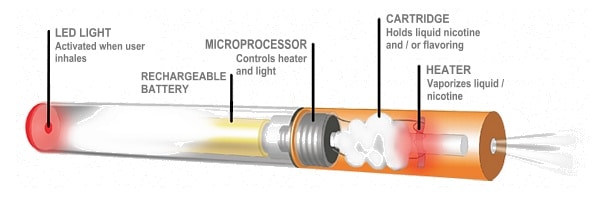
Most electronic cigarettes include three main pieces: the battery, the cartridge and the atomizer. At the core is a Li-Ion battery (disposable or rechargeable), which makes up the longest section at the end of an e-cig.
The battery is then connected to a cartridge containing the mouth piece and most of the other components. Inside, the heating element (coil) and wick make up the ‘atomizer’, the component that creates the vapor.
The wick soaks up e-liquid, which the coil heats into vapor every time you take a drag.
How the Parts Work Together
When a user inhales through the mouthpiece of most (automatic) e-cigs, a sensor picks up the air flow and sends a signal to the atomizer. The atomizer will then activate the heating element and heat up the liquid in the cartridge to convert it to vapor.
As the user inhales, the nicotine is delivered to the lungs, and the exhaled vapor looks similar to cigarette smoke. To add to illusion, most electronic cigarettes have a light-emitting diode (LED) at the end of the battery that lights up when the user inhales, simulating a hot ash.
Of course, not all e-cigs are made equal. If you still haven’t made a purchase, consider looking into the different types of e-cigs available so you can find one that suits your needs.
More About E-Cig Cartridges
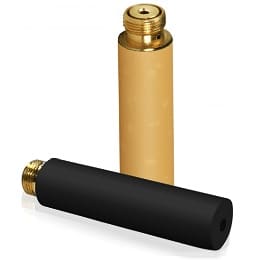
Cartridges come in a variety of different flavors and contain different levels of nicotine, depending on the user’s preferences. Flavors range from tobacco or menthol – to apple, cherry, caramel, chocolate, coffee and more. They can be purchased in a disposable, pre-filled format or as liquids that are used to fill blank cartridges or tanks.
Besides nicotine and added flavoring, the liquid or “smoke juice” in a typical e-cigarette is made mostly of propylene glycol (PG) and vegetable glycerin (VG), the same kind of base used in fog machines at concerts.
PG is a common additive in foods, cosmetics and medicines. Vegetable glycerin (VG) is thicker, so most e-liquids use a mix of both.
Both are considered safe to eat, but that doesn't prove they're safe to inhale. Long-term research on inhaling them is still limited.
* More about the ingredients of an e-cigarette →
Effects of E-Cigarettes
FDA says e-cigarettes can generally be a lower-risk alternative for adults who smoke, but they are not risk-free. They deliver harmful chemicals and nicotine, which is highly addictive.
One small study followed a handful of never-smokers who had vaped daily for more than 3 years and found no clear lung damage. It was too small and too short to show long-term safety, so more research is needed.
You only get the full benefit if you stop smoking completely. Using both cigarettes and e-cigarettes keeps most of the harm of smoking.
How to Vape Safely
No vape is completely harmless, but you can avoid some avoidable risks. Buy from legitimate retailers, choose e-liquids made with pharmaceutical (USP) grade ingredients, and in the U.S. check FDA's list of authorized e-cigarettes.
Never vape products from informal sources, especially THC cartridges. CDC linked the 2019 EVALI lung injury outbreak mainly to vitamin E acetate in THC vaping products.
For those new to vaping, we suggest reading our guide on how to choose e-liquid. Not just to stay safe, but also to find the best e-juice for your needs.
Ready to Vape?
If you smoke and want to switch, aim to replace cigarettes completely. Your local stop smoking service or doctor can help you choose the right nicotine strength.
If you don't smoke, don't start vaping. You must be 21 or older to buy e-cigarettes in the U.S.
Sources
- E-Cigarettes, Vapes, and other Electronic Nicotine Delivery Systems (ENDS), U.S. Food and Drug Administration
- Using e-cigarettes to stop smoking, NHS
- Can electronic cigarettes help people stop smoking, and do they have any unwanted effects when used?, Cochrane
- Outbreak of Lung Injury Associated with the Use of E-Cigarette, or Vaping, Products, Centers for Disease Control and Prevention